A successful brewery project starts before the equipment is manufactured. Brewhouse capacity, fermentation schedule, building layout, utilities, automation level and future expansion all need to work together.
YME provides programming and design support for new breweries, brewery expansions and existing system upgrades. Based on your production targets and site conditions, our engineering team can help define the equipment configuration, process layout and control approach required for the project.
Whether you need an individual brewhouse or a more complete customized brewery solution, the goal is to develop a system that fits how your brewery will actually operate.

Our specialization in brewery automation extends to the design and implementation of customized control systems, uniquely tailored to the individual requirements of each brewery. We understand that every brewery is distinct, and thus, we focus on creating bespoke automation solutions. With us, you receive not just off-the-shelf systems, but a fully customized approach to automation.
Our in-house team of proficient programmers and designers is skilled at developing intuitive and efficient automation solutions that enhance your brewing operations. Whether you aim to automate specific brewing steps or require a complete overhaul of your brewery's automation, we have the expertise and creativity to deliver.

Brewery equipment should be selected around production capacity, operating frequency, site conditions and future expansion. YME reviews the main project requirements before confirming the equipment configuration.
Target batch and annual production capacity
Brewing frequency and beer portfolio
Fermentation and conditioning cycle
Building dimensions and ceiling height
Water, electricity, steam or gas conditions
Cooling, CIP and packaging requirements
Existing equipment and future expansion plans
| Project Requirement | Design Consideration |
|---|---|
| Production capacity | Brewhouse size and daily batches |
| Beer portfolio | Vessel configuration and cellar flexibility |
| Fermentation cycle | Fermenter quantity and capacity |
| Building layout | Equipment placement and operating space |
| Heating source | Electric, steam or suitable alternative |
| Cooling demand | Glycol system capacity |
| Cleaning | CIP configuration and piping |
| Packaging | Kegging, bottling or canning |
| Automation | Manual, semi-automatic or PLC control |
For capacity planning, explore YME's300L–1000L brewhouse systemsand10HL–100HL commercial brewhouses.
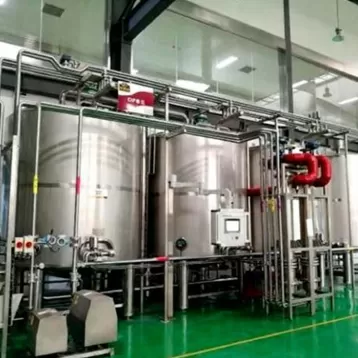
Brewhouse, fermentation, cooling, cleaning and packaging systems should be planned as one production flow.
Malt handling and milling
Mashing, lautering, boiling and whirlpool
Wort cooling and transfer
Fermentation and conditioning
CIP cleaning
Kegging, bottling or canning
Water, steam, electricity and drainage
Operator access and future tank additions
For complete equipment options, view YME'scommercial brewing equipment.
The control level should match brewing frequency, labor requirements and the degree of process repeatability required.
Manual sanitary valves
Local temperature control
Manual pump and motor operation
Operator-managed brewing steps
PID temperature control
Pump variable-frequency control
Agitator or rake speed adjustment
Flow or level monitoring
Selected process interlocks
Touchscreen HMI
Recipe management
Automatic temperature steps
Pump, motor and valve control
Water dosing and alarms
Batch monitoring and remote troubleshooting
Fermentation capacity often becomes the production bottleneck. Tank quantity should be planned according to brewing frequency, fermentation time and packaging schedule.
Weekly brewing frequency
Fermentation and conditioning time
Single-batch or double-batch production
Number of beer styles
Dry hopping requirements
Packaging frequency
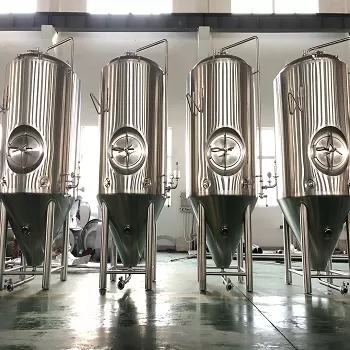
YME'sstainless steel fermentation tankscan be configured around the required cellar capacity and available space.
Cleaning requirements should be defined during the layout stage. Depending on tank quantity and piping complexity, the brewery can use a portable unit or a centralizedCIP system.
CIP supply and return routes
Tank spray coverage
Pump and heating capacity
Drainage and cleaning sequence
Sanitary valves and fittings
Packaging affects cellar capacity and production scheduling. Equipment should be selected according to how the finished beer is sold.
Keg washing and filling
Bottle filling and capping
Can filling and seaming
Labeling and conveying
Finished beer holding tanks
YME can integrate suitablebottling and canning equipmentfor packaged beer production.
Future expansion is easier when utility and layout capacity are reserved in the original design.
Space for additional fermenters
Spare glycol cooling capacity
Additional control points and piping connections
Reserved electrical or steam capacity
CIP capacity for additional tanks
Packaging line expansion space
After the equipment configuration is confirmed, the project can move from engineering into manufacturing, testing and installation.
Requirement review
Equipment configuration
Layout and process design
Technical drawing confirmation
Manufacturing
Factory assembly and testing
Packaging and shipment
Installation and commissioning support
Operator training
After-sales support
Learn more about YME'sbrewery equipment installation serviceandafter-sales support.
Define production capacity, building conditions and utilities before selecting the brewhouse, cellar, cooling and packaging systems.
Plan a Customized BreweryIdentify the real production bottleneck before adding equipment. Common limits include brewhouse cycle time, fermentation capacity, glycol cooling, CIP and packaging throughput.
Discuss Your Brewery ExpansionExisting tanks, chillers, pumps or packaging equipment may be retained when the connection, capacity and control requirements are compatible with the new system.
Discuss an Equipment UpgradeSend YME your production plan and site conditions. Our team can help define the required equipment configuration, automation level and supporting systems.