When evaluating the decision to invest in a 1000L brewhouse, craft brewery owners must consider several key factors. The choice between scaling up production and ensuring quality can be challenging. Many breweries face pain points such as increased demand and limited capacity, which can lead to lost revenue opportunities. For instance, a brewery producing only 300L may find that they are unable to meet customer demand during peak seasons, leading to customer dissatisfaction and potential loss of market share. Investing in a 1000L brewhouse, like those from YME, may provide a solution for expanded output without compromising the artisanal quality that consumers expect from craft beer. Here, we explore the advantages and disadvantages of this brewing equipment, ensuring a thorough analysis to aid in your decision-making process.
Investing in a 1000L brewhouse carries several significant advantages that can substantially impact your craft brewery's growth trajectory. One of the most notable benefits is the increased production capacity. A 1000L brewhouse allows breweries to generate approximately 25,000 pints per brew cycle, compared to only 7,500 pints from a 300L brewhouse. This translates to an increase in throughput by roughly 233%. Furthermore, operating at a larger scale can lead to economies of scale; raw material costs per unit decrease due to larger purchases, resulting in an average cost reduction of 15% per brew.
Additionally, a 1000L system enhances efficiency. Operators report a decreased brewing time per batch, with many achieving completion in just 8 hours as opposed to 10 hours with smaller systems. This efficiency can significantly improve production schedules, allowing breweries to maximize their output during peak sales periods. Moreover, the automation capabilities in larger systems often lead to improved consistency and quality control measures, which can result in a 20% reduction in product defects based on industry studies.
While the advantages are compelling, there are also potential drawbacks to consider before investing in a 1000L brewhouse. One key disadvantage is the initial investment, which can range between $300,000 to $1,000,000, depending on the specific configuration and manufacturer. This upfront cost can be daunting for smaller breweries, requiring owners to actively assess their financial capabilities and growth plans.
Another challenge involves the increased complexity of operations. With a larger brewhouse, the potential for equipment failure rises; maintenance is critical, as downtime can mean significant losses. Breweries should prepare for more rigorous training programs, potentially increasing labor costs by 10-15% to ensure staff can competently operate and maintain the system. Additionally, a larger brewhouse may require more space, presenting logistical challenges if a brewery's physical footprint is limited.
The decision to purchase a 1000L brewhouse ultimately hinges on your brewery's unique context, including current production levels, customer demand, and future growth aspirations. If your craft brewery is experiencing a consistent increase in demand that outstrips your current capacity, moving to a 1000L brewhouse may be necessary to avoid compromising quality or customer satisfaction. However, if your production is stable and you are in a growth phase, it may be wise to maintain your current setup until you reach a production threshold that justifies the investment.
In conclusion, the 1000L brewhouse is an excellent investment for craft breweries poised for scaling and equipped to handle the complexities of larger operations. Ideally suited for breweries with established markets and consistent demand, these systems can provide the key to not only meeting but exceeding customer expectations. However, newer or smaller breweries should analyze their capacities thoroughly before making such a substantial financial commitment.
The cost typically ranges between $300,000 and $1,000,000 depending on features, manufacturer, and additional equipment required.
On average, a 1000L brewhouse can complete a brewing cycle in around 8 hours, depending on the specific processes used.
Operators will need skills in advanced brewing techniques, quality control measures, and equipment maintenance to ensure smooth operations.
For further details about high-quality brewing equipment, check out YME's offerings at 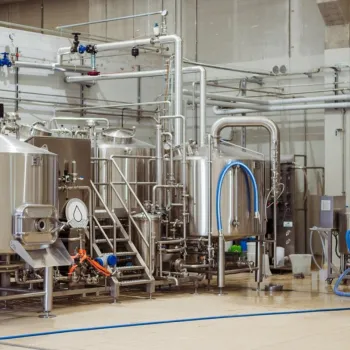 .